Jim, a professional artist at the Columbus Glass Arts Center, guides students through the process of making a glass bowl.
The Ceramic and Glass Industry Foundation (CGIF) recently hosted a successful GLOW, Glass Learning Opportunities Workshop, outreach event at the Columbus Glass Arts Center, welcoming nearly 90 middle and high school students for a hands-on introduction to glass and materials science.
The workshop brought together 50 students from Linden McKinley STEM Academy in Columbus and 39 students from The Dayton Regional STEM Schools for a full day of hands-on learning supported by 24 volunteers, including several from Alfred University. For many of the students, the event offered their first chance to see how glass connects creativity, engineering, and real-world careers.
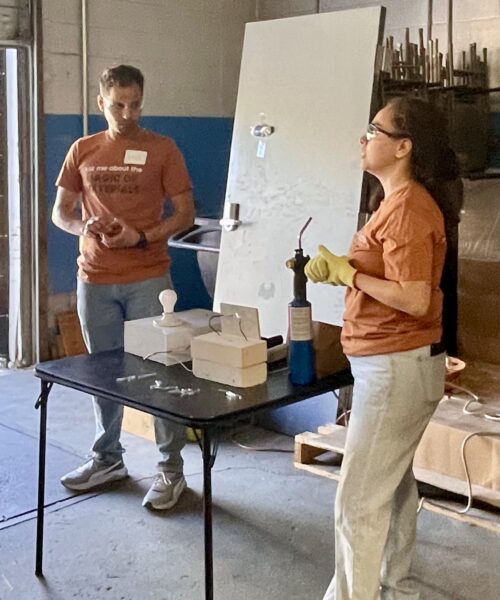
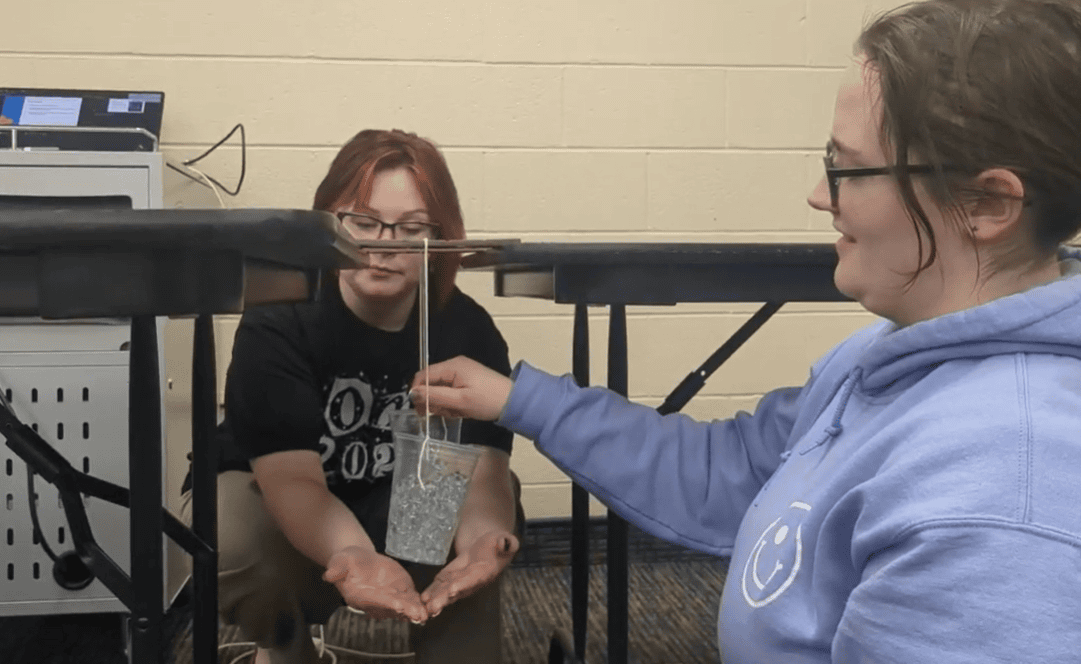
Volunteers demonstrate ion conduction using an interactive activity.
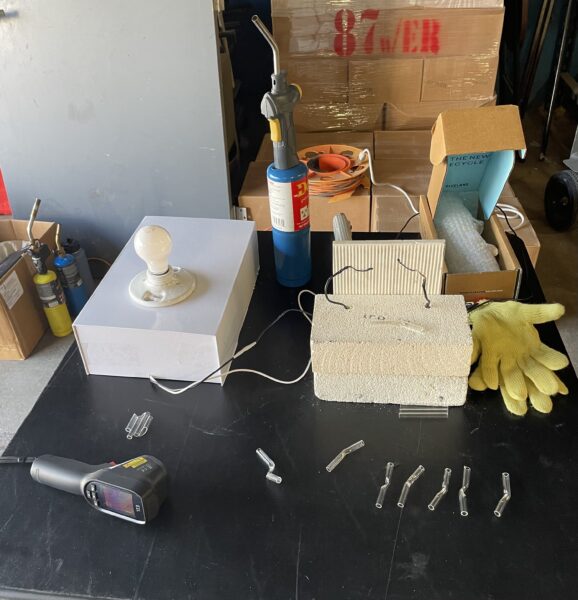
Ion conduction setup for the interactive activity.
GLOW is one of CGIF’s signature outreach programs, designed to help students understand the science behind glass while also introducing them to the people who work in the ceramics and glass field. Throughout the day, students rotated through interactive experiences that blended art, engineering principles, and conversations about career pathways. The program encouraged students to explore materials science not as an abstract subject, but as something they could touch, observe, and imagine themselves pursuing in the future.
The visit began with a live glass-blowing demonstration led by a professional artist. From the studio risers, students watched molten glass transform under heat and motion as Nathan McIlwaine, CGIF Program Manager, explained the science behind the art, gaining a direct view of the precision and creativity required in glassmaking. Many were captivated by how the glowing material changed shape with each tool, rotation, and temperature adjustment, an experience that brought physics and chemistry to life in a way few had seen before.
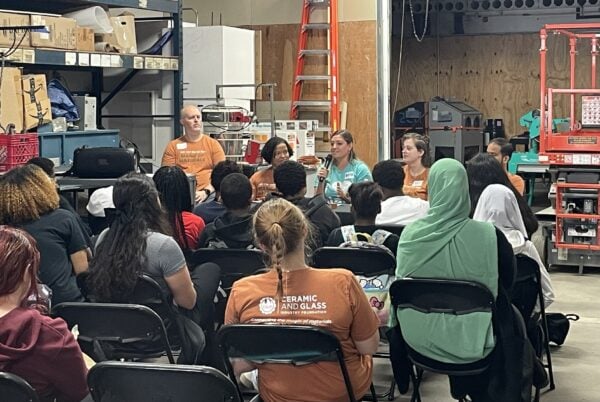
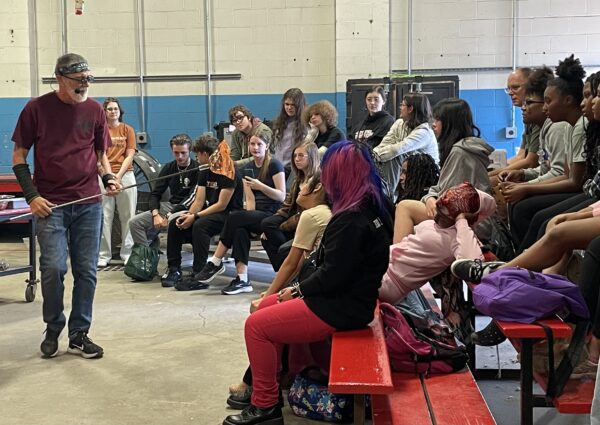
Bryn Snow, one of the career panel guests, shares her journey into a career in the materials science industry.
Students then joined a career panel featuring four professionals representing national laboratories, industry, and academia. Panelists shared their personal paths into materials science, the roles they hold today, and the moments that inspired their careers. The conversation quickly became interactive as students asked questions about college programs, daily work experiences, and what it takes to succeed in the field. Hearing directly from experts helped students connect what they saw in the studio to a wide range of future possibilities.
Outside, Alfred University students and professor Doris Möncke led demonstrations focused on engineering and the properties of glass. Students examined the strength of Prince Rupert’s drops, a teardrop-shaped piece of glass with intense internal stress that forms a surface hard enough to withstand a hammer, but fractures spectacularly when the weakest point, the tail, is broken. They also observed firsthand how safety glass used in applications such as windshields is engineered to fracture in controlled ways, and even how conductive glass interacts with electricity to complete a circuit. The demonstrations were conducted outdoors with appropriate safety measures so students could observe fracture patterns and materials behavior up close. These activities helped reinforce how the structure of glass influences its performance, a concept that ties into both scientific study and everyday applications.
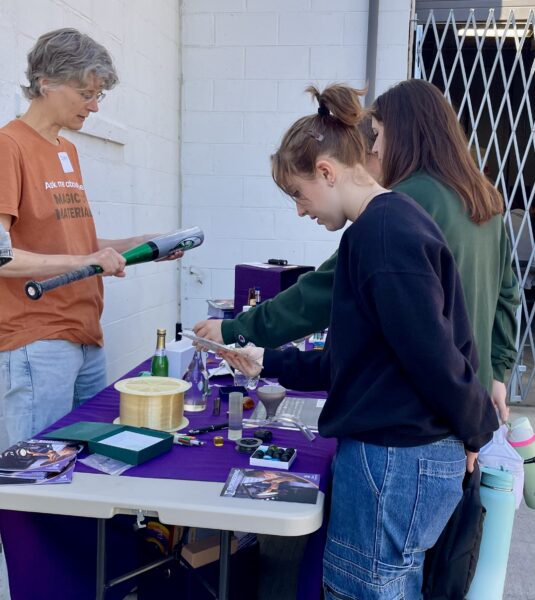
Doris Möncke engages middle and high school students while explaining the materials science elements on display.
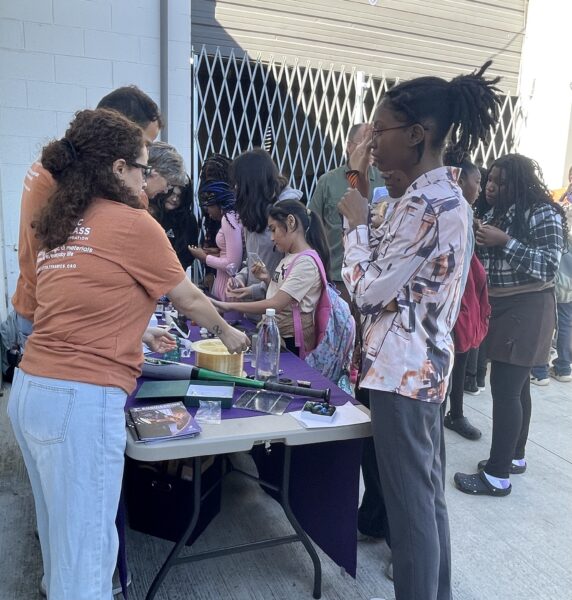
Middle and high school students explore materials science elements on display while volunteers provide explanations.
Teachers accompanying the groups said the experience had a meaningful impact on their students. “This field trip was a great opportunity for the students and a great way for them to learn more about materials science,” said Joe Wiese, a science teacher from Linden McKinley STEM Academy. Catherine Amoateng, who teaches Chemistry and Materials Science at The Dayton Regional STEM Schools, shared that the workshop “helped the students get a better understanding of glass science, and tied in great with our curriculum and schedule this semester.” Their reflections underscored how seamlessly the GLOW experience complemented classroom learning.
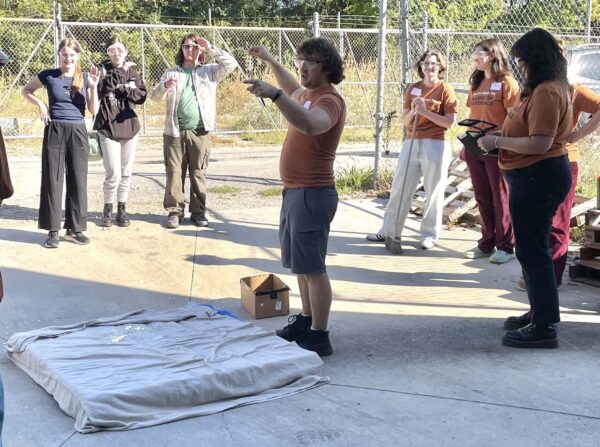
A volunteer walks students through the Prince Rupert’s drop demonstration.
By the end of the day, students left with a clearer understanding of how glass works, where it is used, and who works with it, from artists and engineers to researchers and manufacturers. Through programs like GLOW, CGIF continues to make materials science accessible, engaging, and full of possibility for students across the country.
Help us continue to empower the next generation of ceramic and glass professionals. Give now at https://foundation.ceramics.org/get-involved/donate/