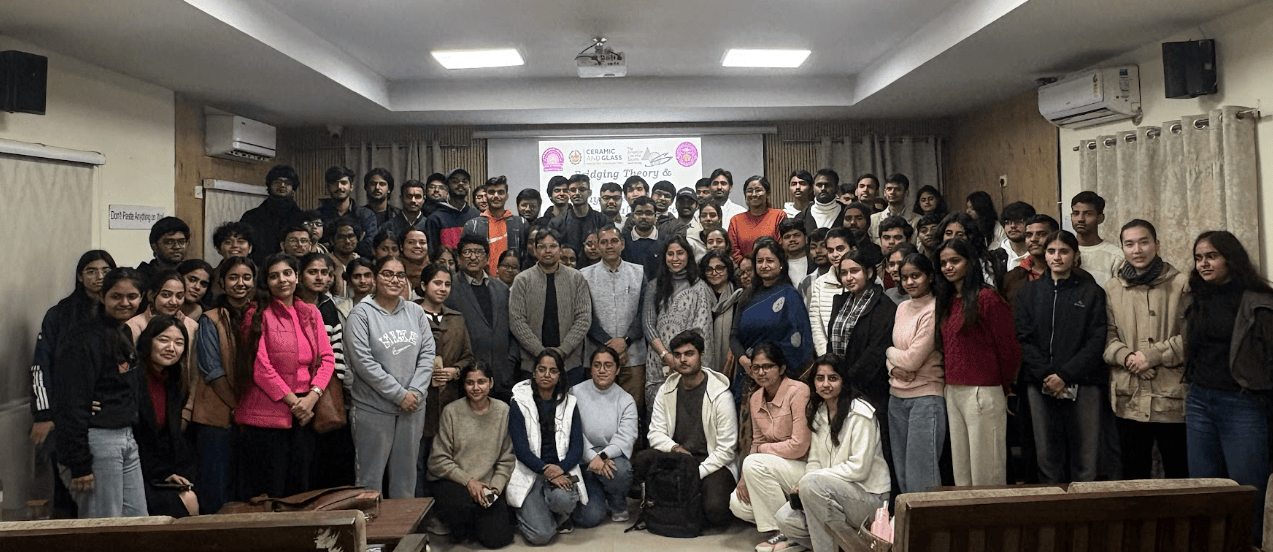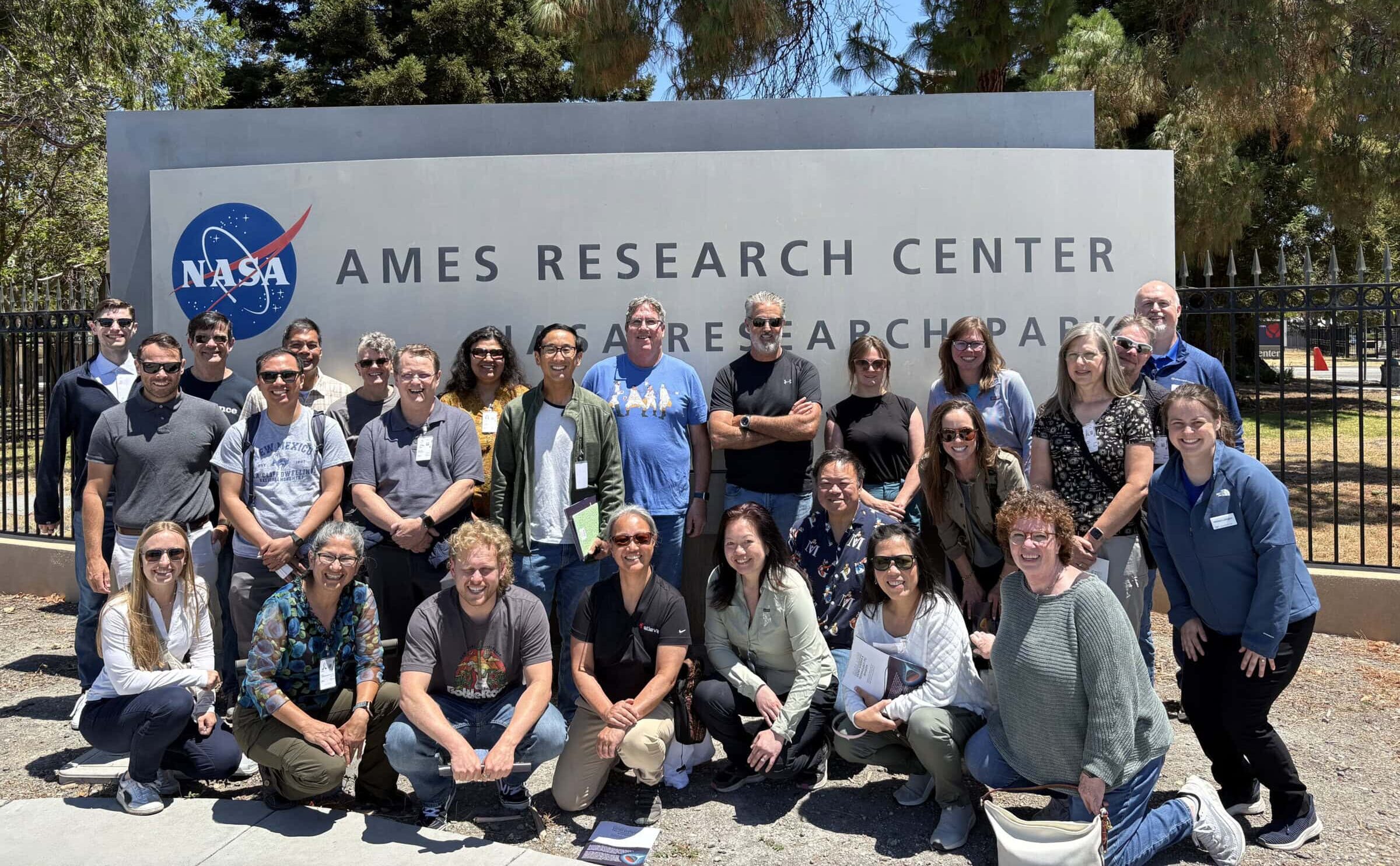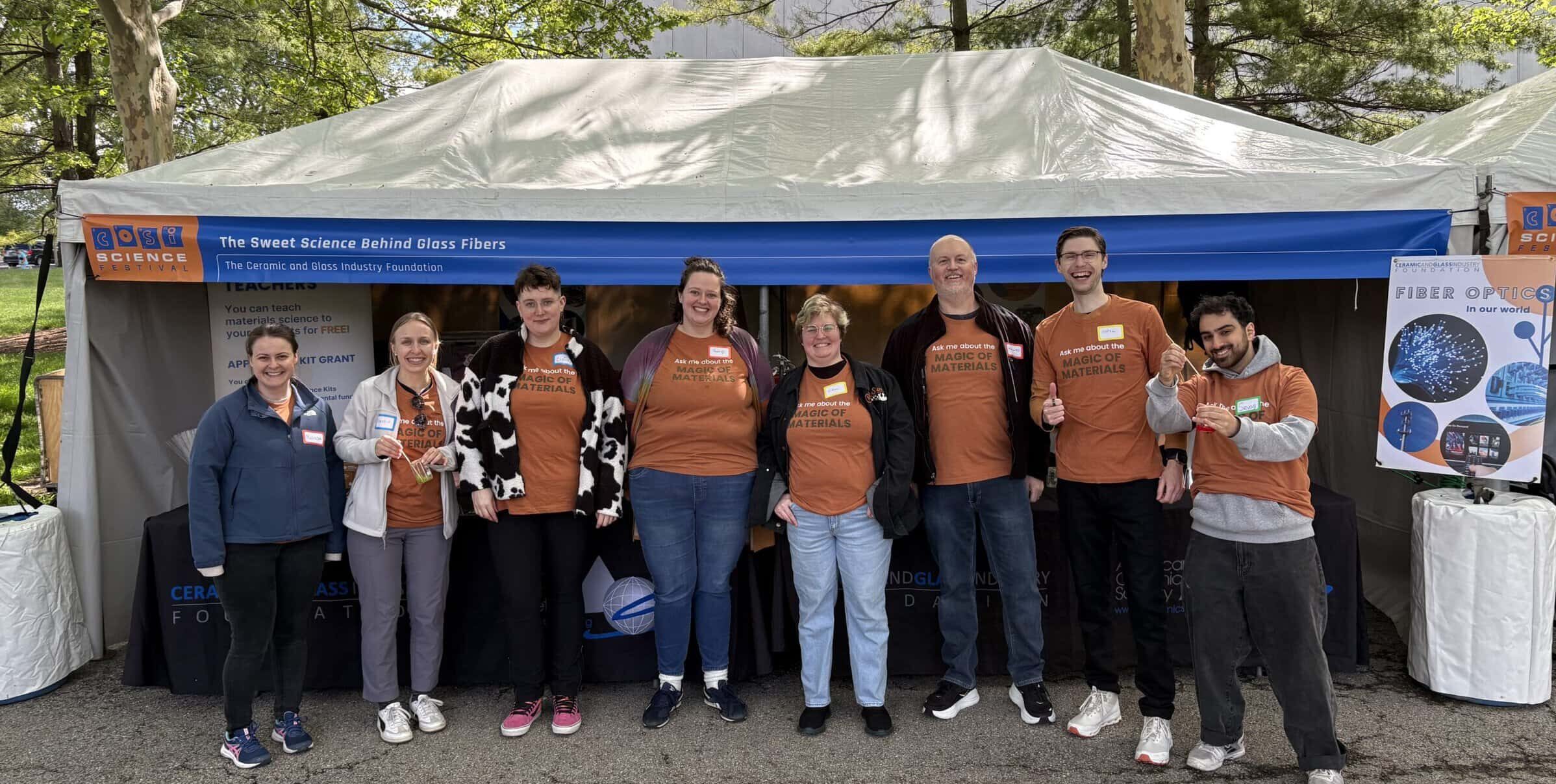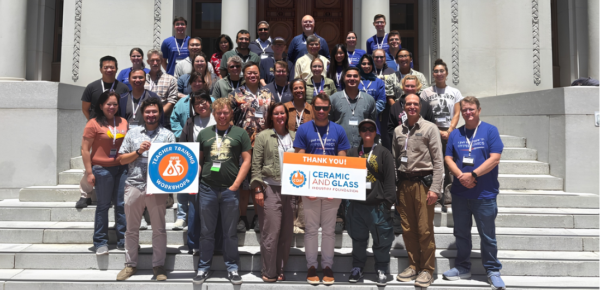
Teachers, volunteers, CGIF staff, and industry luncheon guests gathered together during the 2026 Magic of Materials Science Teacher Training Workshop at UC Berkeley.
The Ceramic and Glass Industry Foundation (CGIF) brought its Magic of Materials Teacher Training Workshop to the University of California, Berkeley on Tuesday, June 23, welcoming 22 educators from across the greater Bay Area for a full day of hands-on materials science. Held in the historic Hearst Memorial Mining Building, the workshop, “The Magic of Materials Science: Materials for Hypersonic Environments,” used one of the most demanding challenges in modern engineering, hypersonic flight, as a unifying theme for classroom lessons that teachers can bring directly to their students.
The day drew a diverse group of educators, representing 18 schools across 15 Bay Area cities. The teachers were primarily from high school science backgrounds, with a handful of middle and elementary teachers. Participants taught subjects ranging from chemistry, physics, and general science to engineering, math, and even ceramics, a testament to how materials science connects across the curriculum found in K-12 schools. For some, the workshop was their first real introduction to the field. “It was so interesting and informative,” said Hallie Bahr, a science teacher at Lafayette Elementary School. “I was very unfamiliar with material science and now I have a better understanding of what it involves, the careers associated with it, and its presence in every aspect of our lives.”
The workshop opened with an introductory presentation by Prof. Scott McCormack, Assistant Professor of Materials Science and Engineering at the University of California, Davis, who guided teachers from the foundations of materials science to the extreme thermal environments experienced by vehicles traveling at hypersonic speeds.
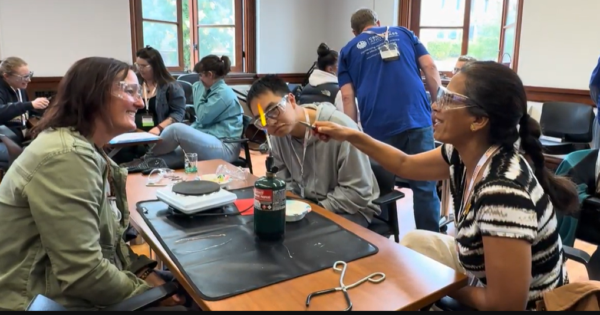
During the Glass Bead on a Wire lesson, educators heat powdered borax and watch it transform into a glassy bead.
From there, instructor Darren Greschuk and CGIF Program Manager Nathan McIlwaine led teachers through nine hands-on lessons and demonstrations connecting everyday materials to extreme environment applications. Highlights included pulling glass-like fibers in the Candy Fiber Pull, exploring phase transformations with Shape Memory Alloys, and testing the strength of reinforced concrete during an outdoor Engineered Concrete drop experiment from more than 20 feet! Throughout the course of the day, the lessons wove in concepts from hypersonic thermal protection systems, structural materials, and the science of high-speed flight, threading real-world applications into the background of every activity teachers walked through.
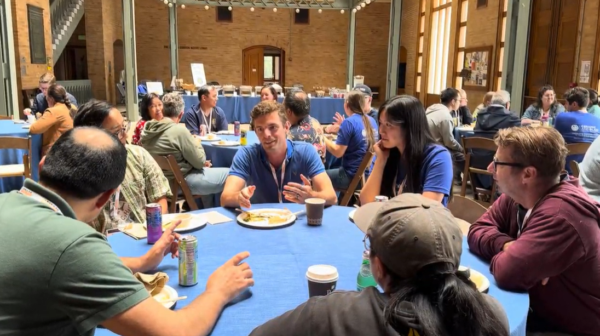
Networking takes place between educators and industry professionals during the Industry Luncheon in the Hearst Memorial Mining Building atrium.
At midday, participants were welcomed to campus by Prof. Mark Mueller, Associate Professor and Director of the College of Engineering Aerospace Engineering Programs at UC Berkeley, before an industry networking luncheon in the building’s atrium. Guests from QuantumScape, Calectra, and UC Berkeley, and UC Davis’ faculty joined the teachers, staff, and volunteers for conversations about careers in the field of ceramics and glass. For Kurtis Bonano, a high school biology and life science teacher at Albany High School, the luncheon was the highlight: “I enjoyed talking with the industry people and professors during lunch the most. I learned a lot about what kinds of career prospects are out there in materials science I can tell my students about.”
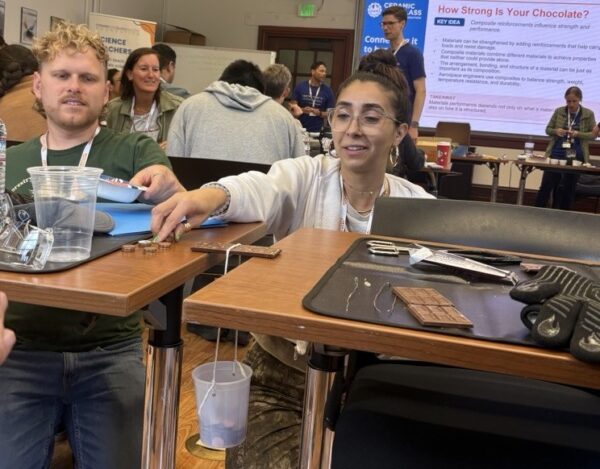
A group of teachers participates in the How Strong Is Your Chocolate? lesson, exploring how material structure influences strength and fracture behavior.
Every participant left with more than ideas. Each teacher received the Hypersonics Teacher Training Manual and a folder of classroom resources, including the Joint Hypersonics Transition Office (JHTO) Hypersonics STEM Curriculum, and each will receive CGIF’s Materials Science Classroom Kits so the day’s activities can move straight into their classrooms this fall.
CGIF extends a heartfelt thank you to UC Berkeley for hosting, to Prof. Scott McCormack, the ACerS Northern California Section, the UC Davis and Berkeley graduate student volunteers who supported set-up and instruction throughout the day, and to our industry luncheon guests.
As these educators return to their classrooms with new lessons, kits, and confidence, thousands of Bay Area students will soon get their own hands-on introduction to the materials that make extreme engineering possible.
Help us continue to empower the next generation of ceramic and glass professionals. Give now at https://foundation.ceramics.org/get-involved/donate/