
Orton Materials Technology Residency
Your Technology. One Summer to Prove It.
To apply, download the worksheet first. It contains every question along with its word limit, so you can write your answers offline, share them with your advisor, and then paste them into the application form when you're ready.
Most summer programs put you on someone else's project.
This one is built around yours.
The Orton Materials Technology Residency is a paid summer position for students with a ceramic, glass, or advanced materials technology that already works at lab scale and needs to go further. You bring the technology. Orton provides the production facilities, the technical supervision, and the industry network to move it toward a repeatable process and a credible path to market.
This is not a place to develop an idea from scratch.
It is a place to take something you have already demonstrated and find out whether it can be made, repeatably, at a scale that matters.
The program is designed to support student-led projects and student ownership of the intellectual property developed during the residency. If your technology falls under a university or sponsor intellectual property policy, that is common and it does not disqualify you.
What You Would Work On
The residency is organized around four pillars.
Technical Foundation
Confirm the underlying science and the material's primary function at lab scale, and establish the baseline performance metrics.
Lab to Scale
This is the heart of the summer. Move the technology from a controlled bench process to a repeatable industrial one. Define the critical process parameters, find the manufacturing bottlenecks, and confirm your material properties hold as batch sizes grow.
Intellectual Property
Audit the patent landscape, run freedom-to-operate searches, and document what makes the technology defensible.
Venture Roadmap
Build the operational plan: target applications, market development, a 12 month capital budget, and the funding sources and partners who could take it further.
The summer ends with a capstone presentation of your results and your roadmap to the leadership of Orton, ACerS, and CGIF.
What Orton Brings
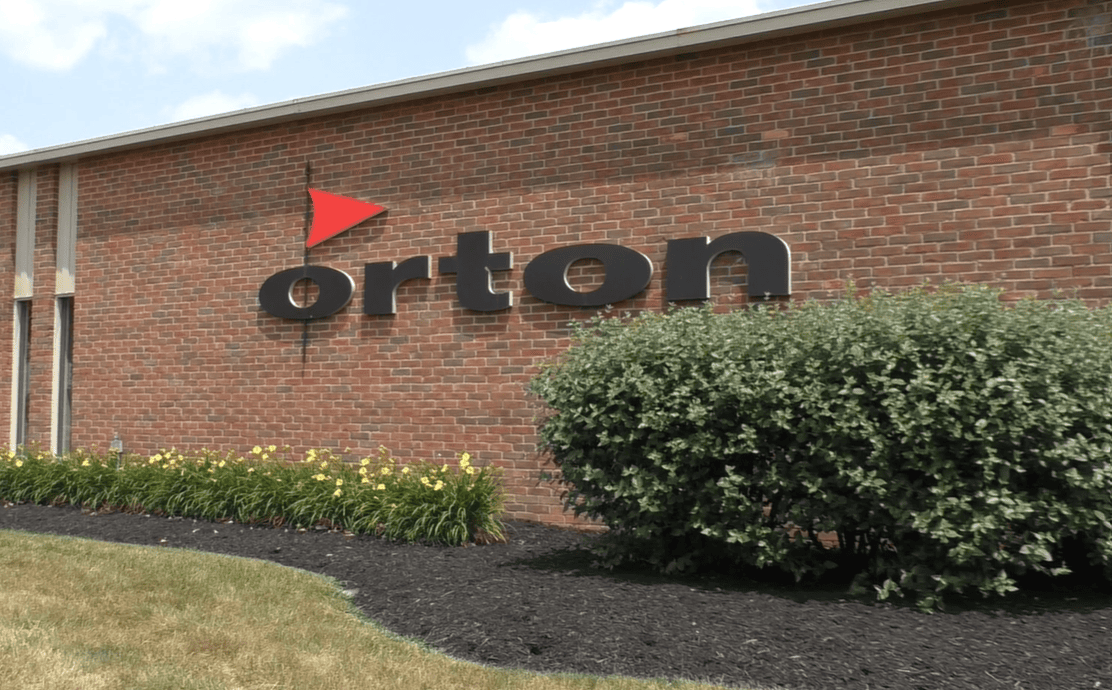
Orton's batch material production, testing, laboratory, and instrument assembly resources are all on a single site in the Columbus, Ohio area. That combination is unusual, and it is the reason a technology can move quickly here. Where a project needs expertise or equipment Orton does not have, Orton brings it in.
You will have direct technical supervision and mentorship from Orton staff throughout the summer, plus access to a curated network of ceramic and glass industry professionals through ACerS and CGIF.
Who Should Apply
This residency is open to all university students: undergraduate, master's, and doctoral.
This residency is designed for technologies that have already been demonstrated at lab scale and are ready for the next stage of development. If you have a working proof of concept and want to test whether it can be scaled into a repeatable process, this program is for you. Projects that are still primarily in the research or early development stage are likely to need more time before they can take full advantage of the 10 to 12 week residency.
You should also be someone who wants to start a company or drive new technology inside an established one. The program is designed for that ambition specifically.
You're a Good Fit If...
- You already have a working technology
- You've demonstrated it at lab scale
- You're ready to investigate scale-up
- You are interested in starting a company or pursuing entrepreneurial roles within established companies
- You can identify the technical challenges ahead
This Isn't the Right Stage If...
- You're still developing the basic concept
- Your technology hasn't been demonstrated
- You're primarily looking for basic research experience
The Details
Duration
10–12 weeks, Summer 2027, full time and on site in the Westerville and Columbus, Ohio area
Compensation
$22.50 per hour
Positions
Up to two for this pilot year
Housing and travel assistance
Travel and housing stipends are available
Eligibility
Must be legally authorized to work in the United States for the full duration of the residency. Employment and visa sponsorship are not available.
Applications close
11:59 PM ET, Thursday, December 3, 2026
Selections announced
January 25, 2027
How to Apply
We expect the application will take two to three hours to complete well. It asks about you, about your technology and the evidence behind it, about how Orton would accelerate the work, and about the intellectual property situation as you understand it.

Download the application worksheet
It contains every question with its word limit so you can write your answers offline and share them with your advisor.

Gather Your Materials
You will also need a resume or CV of two pages or less, and a one to two page project summary containing the technical data that supports your proof of concept.

Paste in Your Answers
When you're ready, paste in your answers through the application form. Most applicants take two to three hours.
Questions? Email foundation@ceramics.org.
The Orton Materials Technology Residency is an initiative of The Edward Orton Jr. Ceramic Foundation, in cooperation with The American Ceramic Society and the Ceramic and Glass Industry Foundation.
Frequently Asked Questions
Questions?
Contact CGIF at foundation@ceramics.org.