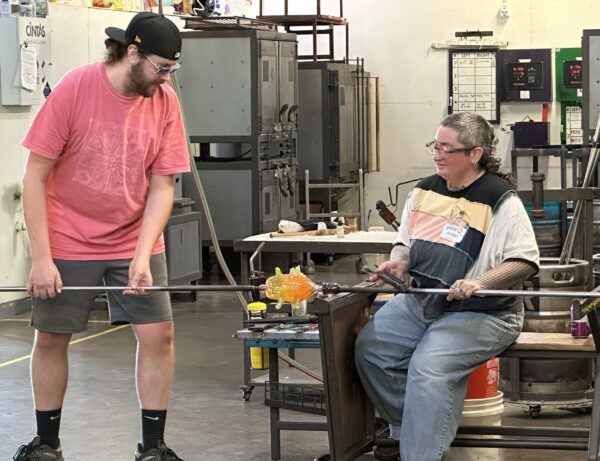
Two professional glassblowers demonstrate the art of glassblowing, guiding students through the process of creating a glass piece.
The Ceramic and Glass Industry Foundation (CGIF) hosted its annual GLOW, Glass Learning Opportunities Workshop, on October 7 at the Pittsburgh Glass Center (PGC) in Pennsylvania, welcoming 126 high school students for a day of hands-on learning about glass, materials science, and the careers that connect them. The workshop was made possible through the generous support of Air Products, whose continued sponsorship of CGIF programs like this one helps bring meaningful STEM experiences to students.
Participants came from five schools across the Pittsburgh region: Avella Area School District, Deer Lakes High School, Franklin Regional High School’s Science National Honor Society (SNHS), West Mifflin Area High School, and Penn-Trafford High School. The day gave every student an up-close look at hot glass, introduced concepts about glass processing, and highlighted many related career paths. The artists showed off their craftsmanship, and knowledgeable volunteers explained scientific concepts and the important impact glass has on everyday life.
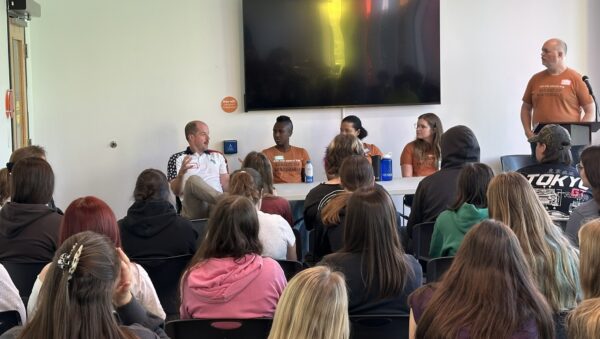
Students explored career opportunities in ceramics and glass as four guest speakers shared their professional journeys and experiences in academia and industry during a career panel. Panelists included Mark Rhoa, Charymayne Longergan, Kim Scott, and Katie Kirchner.
During the workshop, students rotated through three interactive experiences designed to showcase glass from several different perspectives. In the hot shop, students watched professional glassblowers gather, shape, and form molten glass while university-student volunteers explained some of the scientific concepts unfolding in front of them. As the glowing glass stretched on its way out of the furnace, it stiffened as it cooled and lost its bright orange color. Attendees, who were close enough to feel the heat from the glass, witnessed firsthand how temperature and viscosity determine how hot glass behaves.
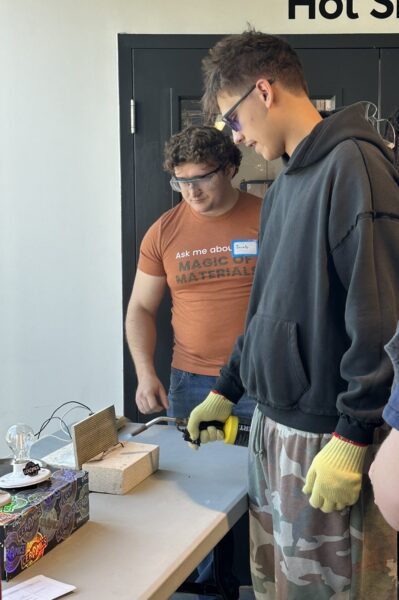
A volunteer and student participate in a hands-on activity exploring how conductive glass interacts with electricity to complete a circuit.
After leaving the hot shop, the students attended a career panel featuring professionals from industry and academia, who shared how they found their way into the ceramic and glass field and what their work looks like day to day. The conversation gave students the chance to ask about college programs, job responsibilities, and the skills that matter most in materials science. Hearing directly from professionals helped students see that the science they had just watched in the studio led to real and varied career paths.
Outdoors, on the PGC’s rooftop patio, Alfred University students and professor Doris Möncke led hands-on demonstrations exploring engineered properties of glass. Students tested the surprising strength of Prince Rupert’s drops. The students were amazed to find that the rounded heads of these small, teardrop-shaped drops could withstand a hammer strike yet shatter instantly when the thin tail was snapped. Connecting that exciting experience to an understanding of internal stress in the glass led into a demonstration of how safety glass, like the kind used in car windshields, is designed to break in controlled and predictable ways to protect the people around it. These lessons helped tie together the three stations to show what people who study and design glass products do, and left students with a clearer picture of how glass works.
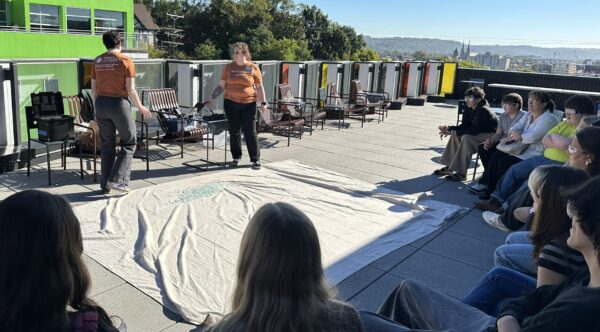
Volunteers demonstrate how safety glass is engineered, helping students understand the science and technology behind its design.
By highlighting both the artistic and scientific sides of glass, GLOW’s well-rounded approach is designed to give students a memorable experience that captures their imagination while engaging their analytical thinking about a material they encounter in daily life. Through programs like GLOW, CGIF continues to make materials science engaging and full of possibility for students across the country.
An event on this scale would not be possible without the people who give their time and expertise. CGIF extends a heartfelt thank you to every volunteer who helped make GLOW 2026 a success. Their enthusiasm and willingness to engage with students made the day memorable. CGIF also thanks the Pittsburgh Glass Center for hosting the event and Air Products for its continued support of GLOW and STEM education.
Help us continue to empower the next generation of ceramic and glass professionals. Give now at https://foundation.ceramics.org/get-involved/donate/